

 11 years ago
Toro review (Xbox One)
Toro was developed and published by Recotechnology on Xbox One. It was released on May 15, 2015 for $19.99. A copy was provided by Recotechnology for review purposes.
Being a video games reviewer has never been more challenging: a single wrong word written in haste may be instantly shared thousands of time across the vast and uncontrolled expanse of the world wide web, often leaving reputations and lives shattered once the dust settles. I might be dramatizing things a little here, but with reviewers being lambasted left, right and centre for their opinions on games like GTA V, The Witcher 3 and so on, I wanted to approach Toro‘s rather sensitive subject matter (bullfighting for those not in the know) with a suitable amount of caution. I needn’t have bothered; Toro is so relentlessly bad that it would be impossible to review it in a positive light even if I was a huge bullfighting fan (which I am most certainly not.)
Although Toro is undoubtedly a game about taunting, jabbing and ultimately killing identical bulls in a multitude of nearly identical locations, I would be overselling it quite considerably if I were to state that Toro simulates or even vaguely represents what happens in an actual bullfight with any level of panache. Each “fight” is split into three timed sections in which the player is expected to hold down the left trigger and press the right bumper (to call the bull) repeatedly, then time one of up to four moves — without being dashed to the floor like some sort of bloodless human-shaped lump who seems to have long since experienced rigor mortis — until the timer runs out. At the end of the first stage, players are expected to press a few buttons in sequence in order to stick flags in the bull, and at the end of the third stage, do the same thing, followed by stabbing the bull just behind its head using a crosshair that the game seems to auto aim at exactly the right spot every time.
 11 years ago
Badland: Game of the Year Edition review (Xbox One)
Badland was developed and published by Frogmind on Xbox One. It was released on May 29, 2015 for $9.99. A copy was provided by Frogmind for review purposes.
Badland is one of the most popular mobile phone games ever, so I guess it’s no surprise to see it finally making the long-awaited transition to home consoles. Developer Frogmind have certainly talked a good game and are promising that this Game of the Year Edition features a huge raft of new and upgraded content, including over 100 levels, plus a load of multiplayer features.
For those (like me) who are pretty new to Badland, the game is a side-scrolling, physics-derived puzzle-platformer that features a chasing camera (think the original Mario Bros.) to ensures a frenetic pace. The sumptuous, hand-drawn graphics mask challenging and varied gameplay that is dished out in bite-sized levels. There is an element of trial and error in most games like this, but Badland does well to ease the pain with its generous checkpoint system.
 11 years ago
Nero review (Xbox One)
Nero was developed and published by Storm in a Teacup on Xbox One. It was released May 15, 2015 for $19.99. A copy was provided for review purposes.

If you asked me what I thought of Nero the moment after I finished it, I wouldn’t have been able to say anything. I had just completed a walk through a gorgeous storybook world, and it reduced me to an emotionally exhausted husk. Even as I write this review, I’m not sure if I’ve fully processed my experience with the game. Either this is one powerful game, or my heart is just really weak.
Nero straddles the line between a first person puzzler and a pure storytelling game. You spend half of the game walking around absorbing the game’s text-delivered tale, while the other is spent working on head-scratching brainteasers. It doesn’t take long to realize which half is stronger, as the puzzle gameplay often feels superfluous compared to the sections that are just walking and reading. The story a page-turner, but the game itself may be a harder sell.
 11 years ago
Rogue Legacy review (Xbox One)
Rogue Legacy was developed and published by Cellar Door Games on Xbox One. It will release on May 27, 2015 for $14.99. A copy was provided by Cellar Door Games for review purposes.
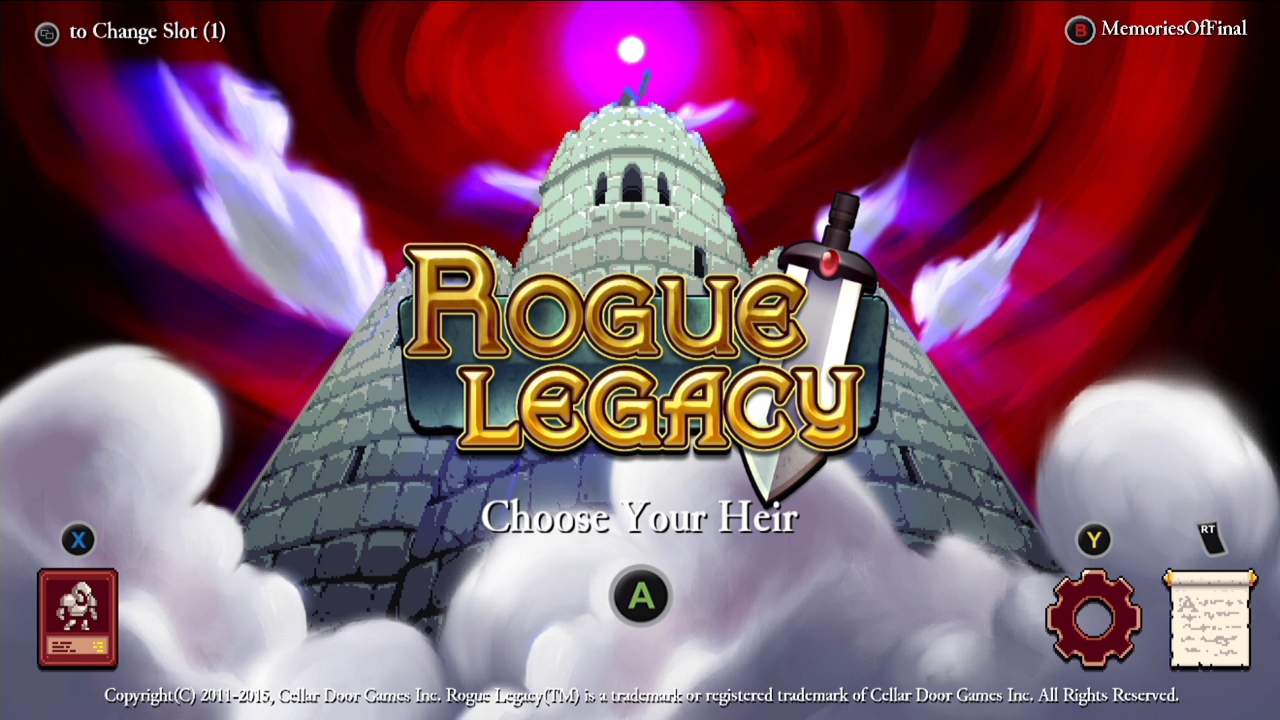
Have you thought to yourself that games have been too easy recently? If you answer yes, Rogue Legacy may be for you. Here is another throwback to the old school era featuring tough enemies with fair tells and many mean and sometimes unforgiving deaths. Levels are randomly generated with death undoing progress made by the player. Heralded as a “rogue-lite,” developer Cellar Door’s game undoes some of the frustrations of rogue-like games by letting players unlock skills and upgrade stats permanently. Many surprises are in-store for players, and you’ll never know what is around the next corner. Through trial and error, you’ll gradually grow stronger and wiser and eventually achieve success. Or not. Welcome to Rogue Legacy.
 11 years ago
Schrödinger’s Cat and the Raiders of the Lost Quark review (Xbox One)
Schrödinger’s Cat and the Raiders of the Lost Quark was developed by Italic Pig and published by Team 17 on Xbox One. It was released on May 12, 2015 for $9.99. A copy was provided for review purposes.
On May 17, 2015, I had a chance meeting with developer Italic Pig over at the XBLA Fans Twitch channel while streaming Schrödinger’s Cat and the Raiders of the Lost Quark. For the sake of brevity, let’s just say I happened to learn quite a bit of the making process of Schrödinger’s Cat. The message I took away from the impromptu discussion with Italic Pig is that the developer had a vision and set out to create a game around a passion for physics. In Italic Pig’s eyes, each portion of the game was designed with a specific purpose to test players in different ways. Most things in the game have a reason for being there, but not every reference or purpose is obvious. Still, the developer believes there is something for everyone here. Do I fully agree with all of the design implementations? No, but I respect the decisions made during the process. Schrödinger’s Cat and the Raiders of the Lost Quark took two years to make with an estimated 60-70 percent of the effort coming from Italic Pig alone. Meanwhile, I spent about eight hours across three different days to play through in its entirety. Let’s see how it stacks up.
 11 years ago
Slice Zombies for Kinect review (Xbox One)
Slice Zombies for Kinect was developed and published by MADE on Xbox One. It was released on May 7, 2015 for $9.99. A copy was provided by MADE for review purposes.
“I don’t want to play this anymore.” Those are the words of disillusion I started to utter within 30 minutes of playing Slice Zombies for Kinect. This is a painful reminder that for every game that tries to raise the bar from its contemporaries, others are happy to coast along as a sub-par, unoriginal effort. It’s not fun to rate a game poorly, but what else can you do for one that aims to be nothing special?
If you’ve ever played Fruit Ninja Kinect‘s classic mode on any platform, you’ve seen most of what Slice Zombies game has to offer. For the rest of us who have not, the one game mode available in this title features players slicing up zombies. Shocking, I know. The player is given three lives (a fourth is available as an upgrade), and each time a bomb is sliced or a zombie is missed, a life is taken away. When all lives run out, the current game ends. Once the round is over, the player is given the option to play again or to go to the shop to buy upgrades earned from playing. In the store, you can buy power-ups to make the experience easier as well as view the modifiers that make the game slightly more challenging. Unfortunately, that’s all there is to the game. For the sake of this review, I decided to play longer, but after an hour I couldn’t take it anymore. It’s the same thing over and over. No more, please.
 11 years ago
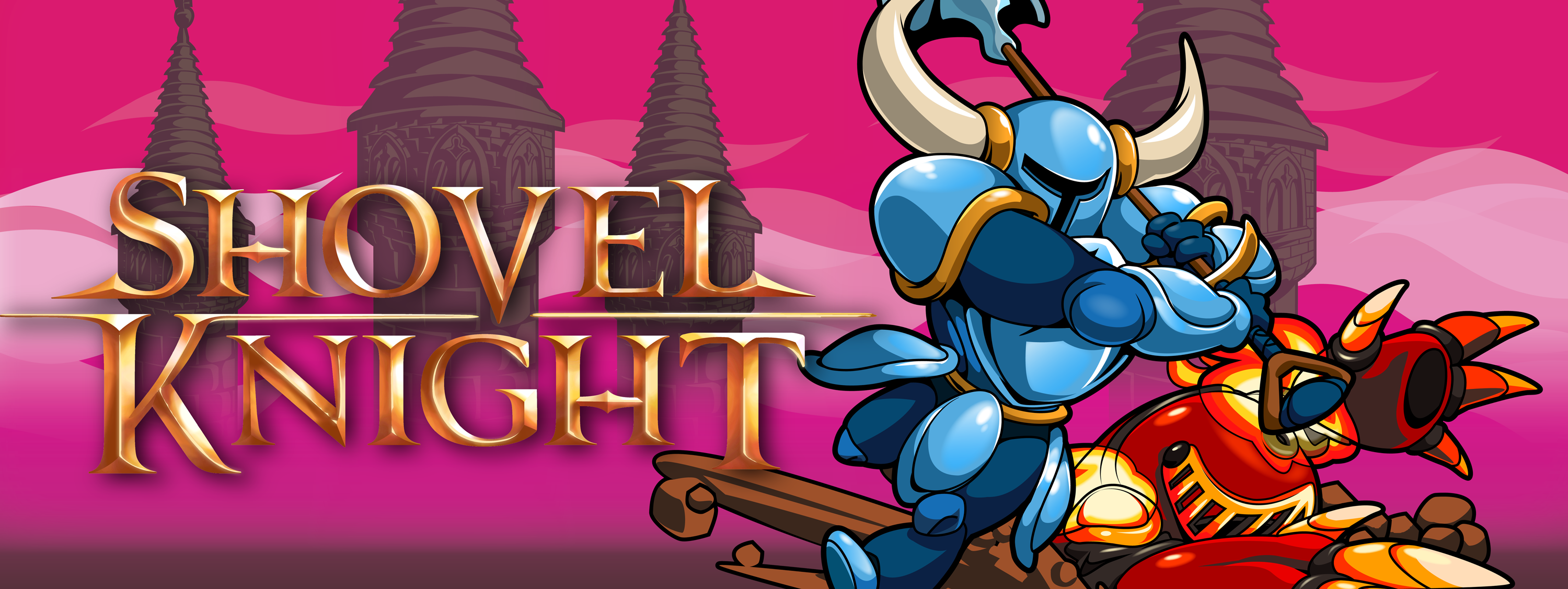
Shovel Knight review (Xbox One)
Shovel Knight was developed and published by Yacht Club Games on Xbox One. It was released on April 29, 2015 for $14.99. A copy was provided for review purposes.
So this review is a little late. Why, you ask? Five hundred and forty-three deaths, that’s why. I played Shovel Knight for a little over 16 hours, but at times it felt like a lifetime. I cried (not kidding, but I do cry pretty easily), I screamed, I cursed at the television and I threw my controller on multiple occasions. I asked myself several times, “Who the hell would actually enjoy playing this game?” But when it was all said and done, I had my answer — me. Shovel Knight will try your patience from the start, but it will also suck you in and provide hours of quality gaming.
 11 years ago
Syberia 2 review (Xbox 360)
Syberia 2 was developed by Microids under Anuman Interactive and published by Bandai Namco on Xbox 360. It was released on May 13, 2015 for $9.99. XBLA Fans’ Michael Cheng purchased a copy out of pocket for review purposes.

Gone are the days where point and click adventures were the in-style games. Now it’s a genre that has been relegated to niche status. Benoit Sokoil’s Syberia series attempts to show the glory of the old days and the wonders of simple gameplay with puzzle elements telling engaging stories. Syberia and Syberia 2 were released during the PlayStation 2 and Xbox era well over 10 years ago and have since been brought back to XBLA recently to give the audience another chance to try these titles in preparation for Syberia 3‘s tentative release in 2015.
Syberia features a heroine named Kate Walker and the journey of her everyday life turned completely upside-down through her wild adventuress in search of the fabled land of Syberia. This sequel can be enjoyed without playing the first title, although it’s still highly recommended you do so to get to know the original Kate Walker and some of the characters she encounters in the progenitor. For those that want an interesting story with puzzles without action sequences, this series may be worth looking at.
 11 years ago
Lifeless Planet: Premier Edition review (Xbox One)
Lifeless Planet: Premier Edition was developed and published by Stage 2 Studios on Xbox One. It was released on May 13, 2015 for $19.99. A copy was provided for review purposes.

When putting pen to paper on a fresh review, it’s often easy to determine the standard of a game based on how it compares to its peers, but that’s a major issue with Lifeless Planet, because, as far as I’m concerned, there is nothing else quite like it. Lifeless Planet is in many ways an interactive story, rather than a traditional video game. It features a compelling narrative about the lone survivor of a crash on a distant (seemingly lifeless) planet that is steadily revealed through audio logs and other records as the player progresses.
What immediately struck me about Lifeless Planet is how well it hides the fact that it is so linear. From the outset the player is made to feel like they are exploring a vast and limitless expanse, to the extent that each time the sun shimmers on a distant metallic object and guides them forwards, it feels more like a genuine discovery than simply turning the page of a book. Sometimes the clues are more obvious — like following a trail of green footprints — but most of the time the more obvious nods are woven into the narrative in a convincing enough way. Perhaps more questionable, however, are Lifeless Planet‘s core puzzle and platform game mechanics, so I was interested to see if the game stood up to extended play – let’s find out.
 11 years ago
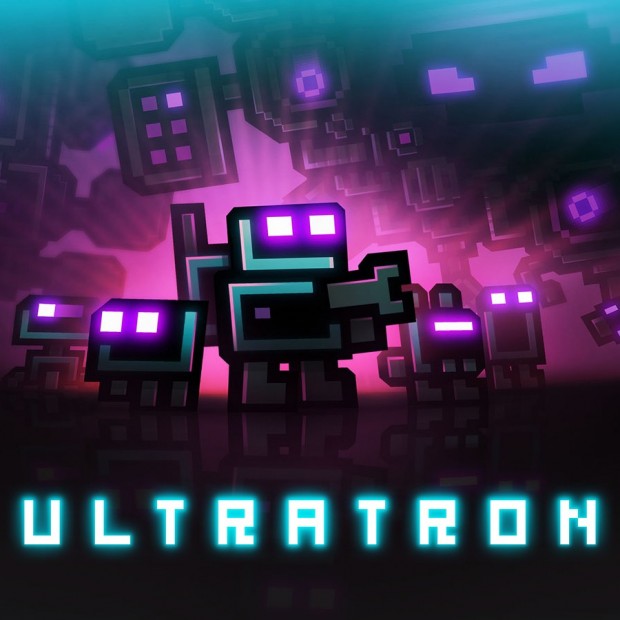
Ultratron review (Xbox One)
Ultratron was developed by Puppy Games and published by Curve Digital on Xbox One. It was released on May 8, 2015 for $9.99. A copy was provided for review purposes.
If any long forgotten genre of videogames has benefited most from the advent of digital distribution and the influx of creative, independent game developers over the last few years, it must surely be the shoot-em-up. We’ve seen more or less every obvious take on the theme imaginable, yet I’m almost always pleasantly surprised by the next innovation or twist.
Ultratron is the latest twin-stick shooter to launch on the Xbox One and it promises a number of interesting features, including “unique retro-futuristic sound and graphics, player responsive difficulty, and a subtle system of tactics combined with classic gameplay.” At first glance, Ultratron looked like a fairly uninspiring arena based shooter, but I’m pleased to report that despite a few minor complaints, there’s more to it than meets the eye.