

 11 years ago
Should game developers let everyone stream every part of every game?
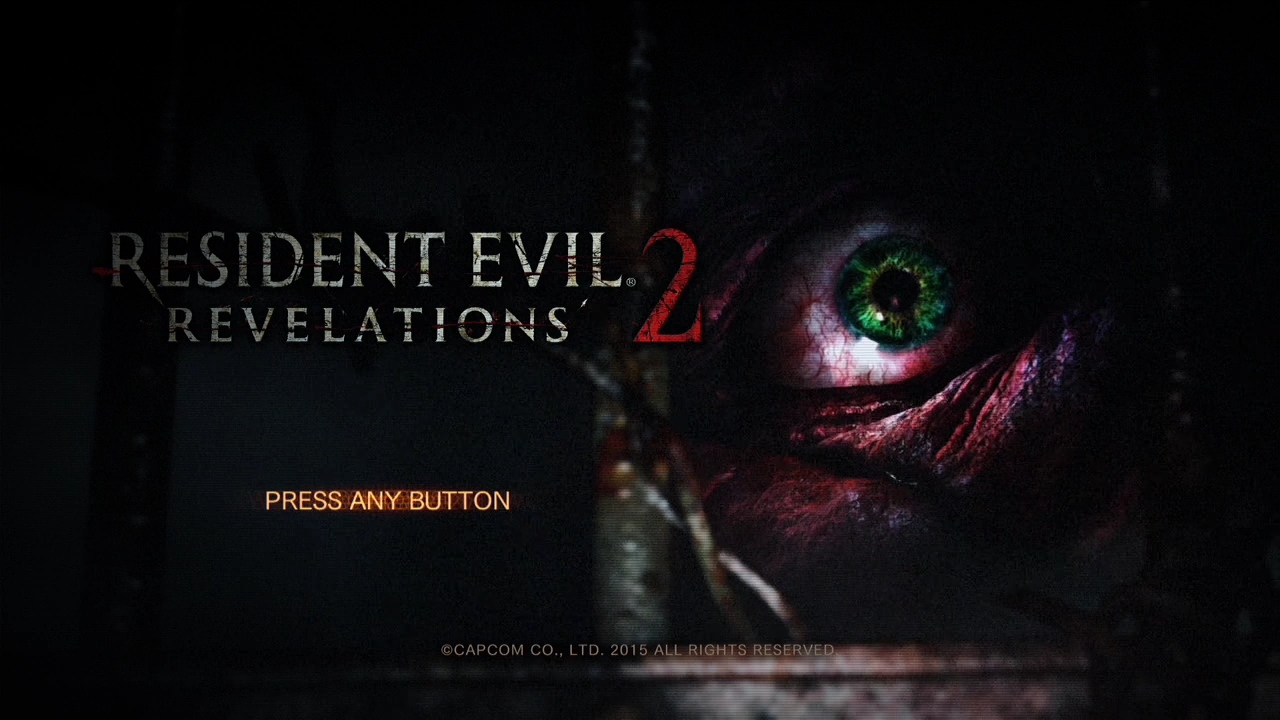
Last month, XBLA Fans was streaming Resident Evil Revelations 2 on our Twitch channel when something unexpected happened: the feed abruptly cut to the pause screen pictured above. XBLA Fans’ Michael Cheng hadn’t stopped playing and was still attempting to actively broadcast gameplay, so we knew something external was affecting the stream.
That something was Capcom. The game’s developer-slash-publisher, in an effort to minimize gamers’ exposure to certain scenes that are critical to determining what ending players receive, blocks segments of Revelations 2 from being streamed via the Xbox Twitch app. Capcom kicks all Xbox Twitch streams to the pause screen during the final boss fight, cutscenes, credits and after-credits cutscene. Speaking with XBLA Fans, a representative for the company explained that it wants to “give players a pure and un-spoiled experience,” so it “chose to disable the native capture so that video sharing during those segments was limited.”
This got us thinking: how do other ID@Xbox game developers view Twitch streaming? Are they worried about potential gameplay or story segments being ruined for viewers? We asked a few developers if they had official Twitch policies and whether or not they felt streamers were helping their games to find larger audiences. Official stances on Twitch were a bit mixed, but everyone we talked to agreed that streaming could benefit them. One in particular, however, cautioned against giving streaming codes to anyone and everyone and noted that not all games companies need help from streamers.
Of streams and spoilers
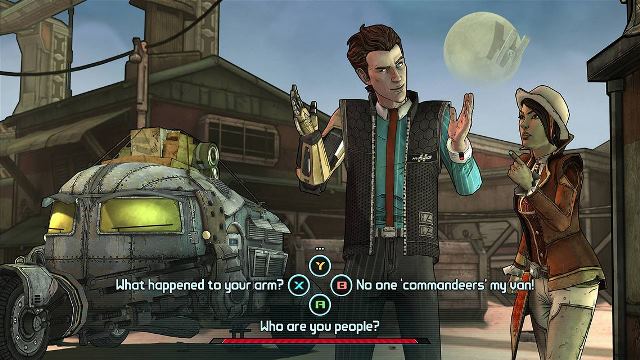
There is perhaps no ID@Xbox developer more well-known for story-driven experiences than Telltale Games. Unfortunately, the studio that popularized episodic game releases declined to comment directly on the issue. Telltale, however, did partner with The Nerdist to stream the entirety of the first Tales from the Borderlands episode a week ahead of its release last November. It also got together with voice actors Troy Baker and Laura Bailey to stream the second episode a few days after its release late last month. It remains to be seen whether or not Telltale will be so eager to stream the season’s surely spoiler-filled final episode in full, but its past actions paint a picture of a studio that does not shy away from streaming spoilers.
 11 years ago
Project Root preview: shoot first
It could be said that time has not been kind to the humble shoot-em-up. Over thirty years ago, games like Space Invaders, Defender, Asteroids and Galaxian were drawing mullet-sporting teens in stonewashed skinny jeans and tight leather jackets to amusement arcades like moths to the glowing neon lights that would hang above the entrance. Today, such arcades are a rarity; mostly replaced by shops or trendy bars and often pulled down entirely, whilst the teenagers of 2015 queue all night outside their local grocery store to buy the latest copy of Call of Duty minutes after its launch.
The shoot-em-up genre has never been keen to go quietly into the night, however, and every generation of consoles has had its fair share of classic static, scrolling and roaming shoot-em-ups for players to consider. I’ve been lucky enough to spend a couple of days with Project Root, an upcoming shooter from Argentinian developer OPQAM that is positioning itself as the definitive next-generation take on this classic genre.
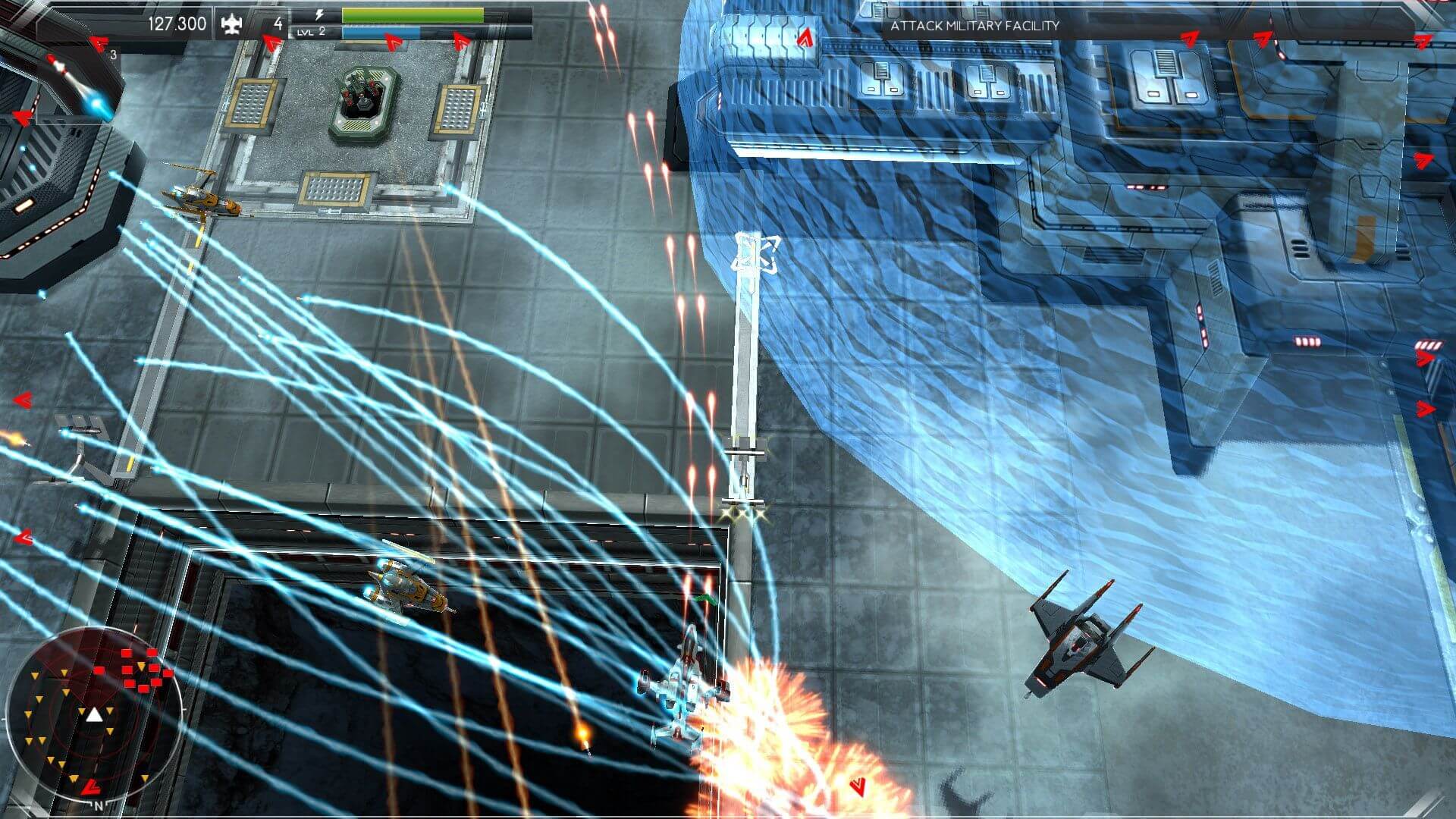
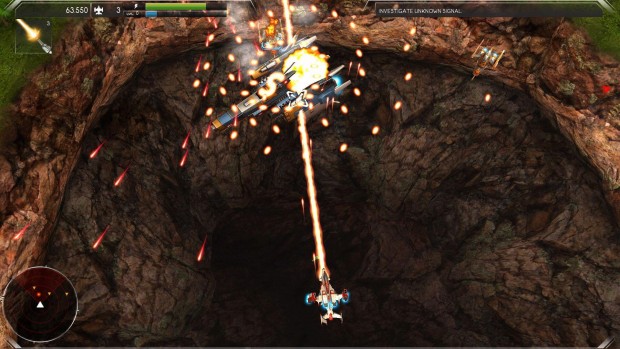
Project Root claims to feature a unique open world aspect in addition to crisp controls, cutting edge graphics, a comprehensive upgrade system and a truly exceptional level of challenge. The game isn’t scheduled for release for a few more weeks, but my experience with it over the past couple of days leads me to suggest that it may yet need a little work to live up to the lofty expectations set by the forebears which it aims to emulate.
 11 years ago
Fortified preview: Soaring above
You’ve no doubt heard the saying “it’s not rocket science” before. Well, when it comes time to choose your class in the new base defense game, Fortified, that saying takes on a very literal meaning. In Clapfoot Games?? new multiplayer game you’re probably going to want to go with the Rocket Scientist.
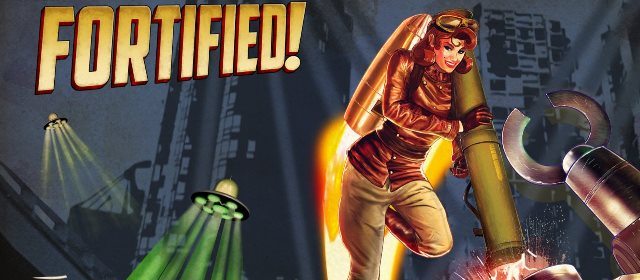
Set in the 1950s with an urban sci-fi feel, Fortified features four classes; the first of which is the Rocket Scientist. This redheaded little lady was the first character Clapfoot developed, and maybe that’s why she’s arguably the best.
While at PAX East, XBLA Fans had a chance to play Fortified and spoke with Technical Artist, Henrique “HB” Barbieri, who made it very clear that when given my choice of character we should go with the Rocket Scientist. So I did.
 11 years ago
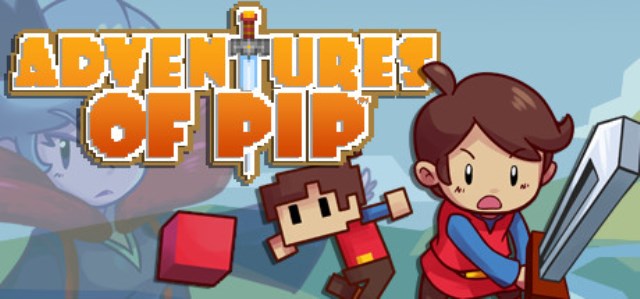
Adventures of Pip tells the story of gaming’s art evolution
Even if you’ve never played a video game before in your life, you won’t have trouble deducing where not to go in Adventures of Pip. A series of floating skull and crossbones symbols hover above each of the platformer’s bottomless pits. It’s an unambiguous message from the developers conveyed through art.
Tic Toc Games CEO Shereef Morse didn’t want to leave anything to guesswork. “It’s like, ‘Hey guys, you don’t want to go down there, all right?'” he told XBLA Fans at PAX East last month. “We said, ‘Why leave it to guessing, right?'”
Not unlike the studio’s approach to visualizing the dangers of bottomless pits, its central gameplay mechanic is also a very on-the-nose artistic reference to something — art itself. Adventures of Pip tells the story of a one-pixel underdog named Pip who gains the ability to be rendered in more pixels as he quests towards defeating the evil Skeleton Queen. If that sounds vaguely familiar, it’s meant to: Adventures of Pip is also the story of the games industry’s art evolution and what game art has had to give up in order to evolve.
[clickToTweet tweet=”Adventures of Pip tells the story of gaming’s art evolution @xblafans #gaming #XboxOne ” quote=”Adventures of Pip tells the story of gaming’s art evolution “]The idea for this metaphor began germinating around 13 years ago — even if Morse didn’t realize it back then. In 2002 Morse was working as a production manager at WayForward Technologies, and he hired a promising young artist, Marc Gomez, fresh off an education at California Institute of the Arts. Gomez would go on create art for A Boy and His Blob, Contra 4 and Bloodrayne: Betrayal among others. The only thing those three games have in common with one another is that they share absolutely nothing in common, which is exactly the point. Years later, when Morse hired Gomez as his creative director at Tic Toc, it occurred to him that Gomez’s art styles had frequently changed during his time at WayForward. So had the industry’s at large.
 12 years ago
We Happy Few preview: Be happy…or else
The bright white face masks of We Happy Few turned heads on the PAX East show floor this year with their sinister gaze and art style. If you played Contrast, you will immediately recognize Compulsion Games’ handiwork. We Happy Few‘s characters wear a look that says, “Be happy, or else.” And that’s what the game is about.
Creative Director Guillaume Provost explained that We Happy Few explores a dystopian alternate history that takes place 20 years after the Nazis won World War II. How might have Hitler’s ideological fantasies manifested themselves over time? What would daily life be like? What would happen if you tried to resist?
It’s these open questions that the team at Compulsion Games put a lot of thought into. They came up with a world in which the government engineered a utopia where every single person is required to be blissfully happy — no exceptions. To accomplish this, the government keeps everybody drugged so that they will never need to worry about anything at all, not even worry itself. Everybody must be happy, and everybody must conform.
Capcom blocking select Resident Evil: Revelations 2 spoilers from native streaming
No need for spoiler warnings.
Read More
 12 years ago
We Are Doomed preview: Playing with fire
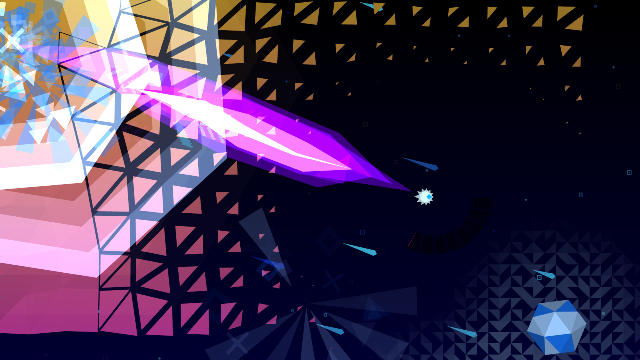
It looks and plays a lot like Geometry Wars. This is the inescapable reality of We Are Doomed, an upcoming twin-stick shooter from one-man studio Vertex Pop. The world is colored with softer, pastel hues, and the enemies are tangible things instead of angular shapes. But anyone who has played Geo Wars will immediately grok what they’re seeing and experiencing in We Are Doomed and will know exactly what to do. Creator Mobeen Fikree isn’t shying away from the comparison.
“I don’t mind,” he told XBLA Fans earlier this month at PAX East. “I think Geometry Wars is a great game, and following in that lineage of Robotron, Smash TV, Geometry Wars and then, you know, this. I’m happy to be a part of that lineage. When people go, ‘Oh, it’s like Geometry Wars!’ I’m like, ‘Yeah, it’s like Geometry Wars.'”
Until it’s not.
The moment you use the right stick to open fire on the waves of space baddies swarming the screen it becomes clear how We Are Doomed diverges from the formula. Instead of blasting enemies with a never-ending stream of long-range laser fire, players instead must rely on a medium-range “overpowered laserbeam,” as Vertex Pop’s website describes it. In actuality, it doesn’t come off like a laser at all. Instead, it looks and feels more like you’re wielding a flamethrower with an infinite fuel supply. Nudging the stick farther in any direction will elongate the beam/flame, but it will never cause it to reach clear across the screen.
If you want to defeat the baddies — and you’ll of course need to do so if you want to make any progress in the game — then you’ll need to get a bit closer than you may be used to getting in other twin-stick shooters. “You have to dive into the action,” explained Fikree. “You have to be close range if you want to zap baddies — you can’t sit in one corner of the map and shoot things all the way in the other corner.”
 12 years ago
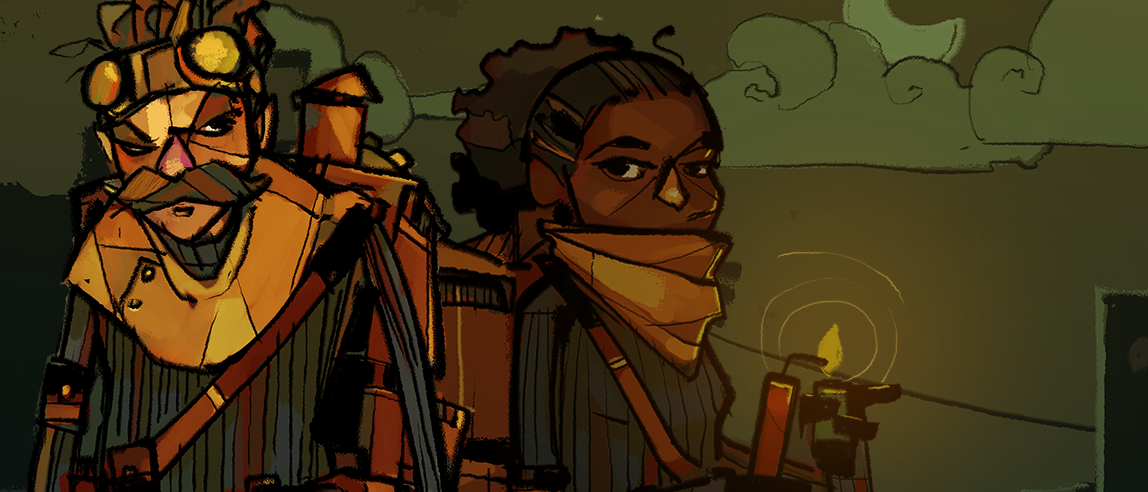
The Swindle is designed to be a stealth game for people who hate stealth games
Do you like the idea of robbing people, gaining crazy amounts of cash and buying really cool stuff, but hate the idea of having to sneak around listening to guards’ conversations for hours? Well, then Size Five Games’ The Swindle may be for you.
The Swindle is a steampunk/cyberpunk heist game that takes place in a version of London where the police have the perfect solution to all of the city’s crime: they’re going to use artificial intelligence to surveil all of London. “As a master thief, that will sort of ruin your job,” explains Size Five Games Director Dan Marshall. The police are going to activate this AI in 100 days, which means that’s all the time you have to try and steal it. Every time you do a heist, whether you succeed or fail, the counter goes down.
Players will collect money while on heists, and, naturally, having more money means you can buy better upgrades and tools that in turn increase your security clearance. Your goal is to collect enough coin throughout the game to gain a high enough security clearance to enter the police district and steal the AI before times run out.
 12 years ago
Resident Evil Revelations 2 review hub (Xbox One)
“So much suffering… You don’t even know what to be afraid of yet.”
Read More