

 13 years ago
More than a tambourine hero: Charlie Murder’s Kelly
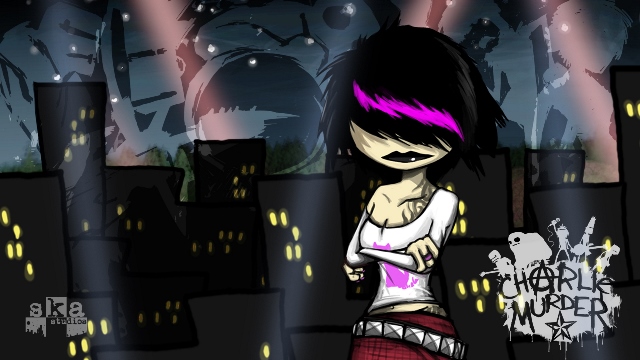
There’s a scene in Ska Studios’ Charlie Murder in which the members of the titular punk rock group do what rock stars do best. No, they don’t rock out, though the game does dedicates several scenes to just that. During the scene in question, the band does the rock star thing and tears apart a hotel room. The rambunctious five behave the way we’ve all come to expect rock stars to behave: irresponsibly. Furniture is destroyed, a mattress gets kicked, hell is raised.
So what, right? That’s all standard rock star fare, and it fits right into a game that celebrates nearly every aspect of the (undead) punk rocker lifestyle. That little mattress-kicking bit, though, well, that seems to have upset at least a few game critics. It’s not so much that the mattress is being kicked that caused the issue, but it’s the individual doing the kicking and the role she plays in the game on the whole that caused some reviewers to be put-off by the character.
The character is Kelly “Skelekitten” Skitten, and she spends most of the hotel scene meagerly kicking at a mattress while the rest of the band — which itself raises from hell in the game’s opening scene — raises hell. Eventually, a male member of the band walks over and does the job of destroying the mattress that Skitten apparently could not accomplish on her own. I noticed it while playing through Charlie Murder for review, but I thought it merely a harmless joke about a woman who looks to weigh all of 90 pounds not being capable of destroying a mattress by kicking it. Another critic felt differently.
 13 years ago
Refurbish your 360 part 1: The greatest custom Xbox 360s ever made
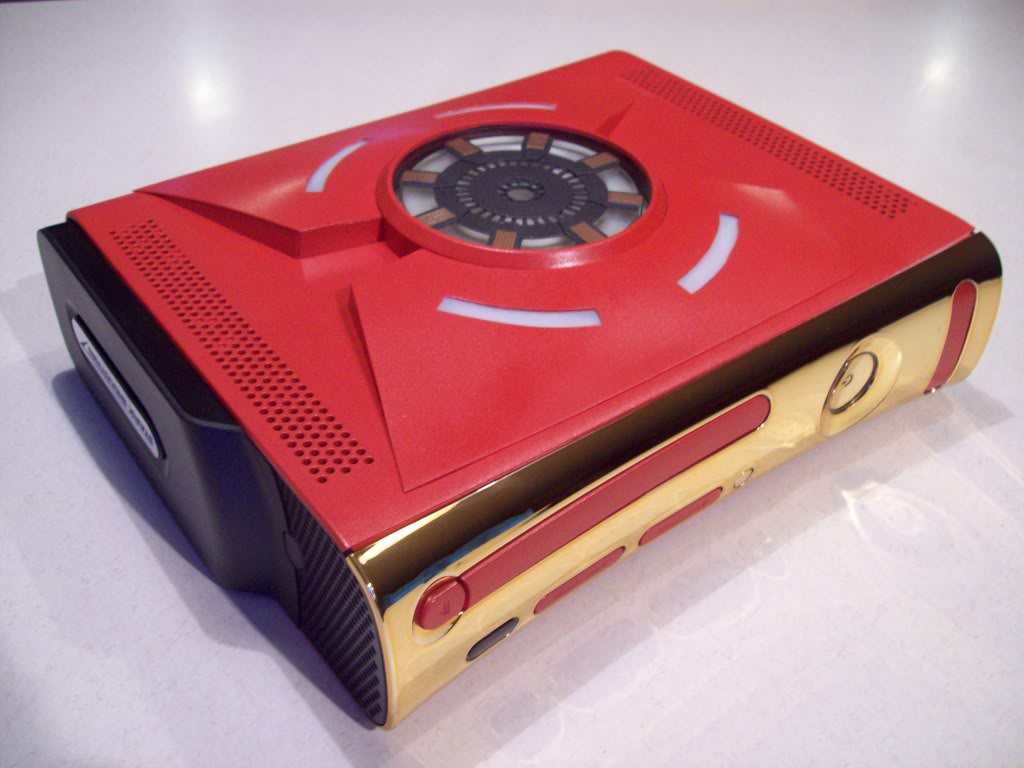
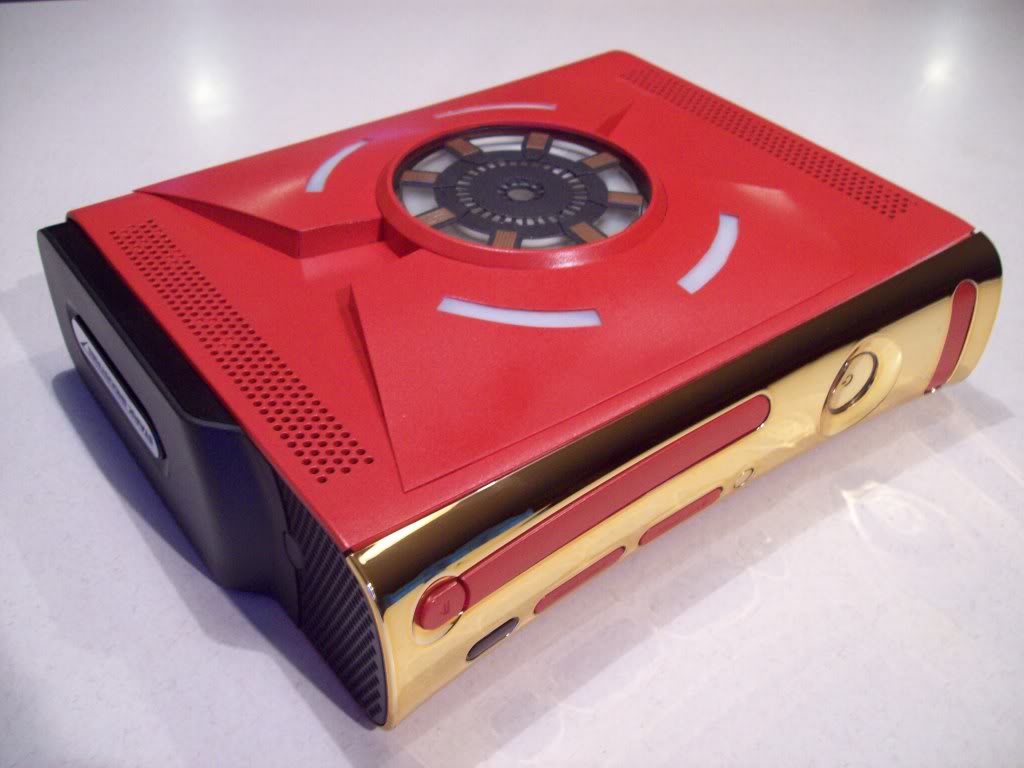
Let’s be honest here. You love your 360. It’s your baby. But after years of use that white casing is looking more yellow than white. It’s got dings, scratches and that little USB door doesn’t close any more. But under the skin she’s just as good as ever. So maybe it’s time to breathe some new life into the old girl. But since it’s long out of warranty why not splurge and create that 360 you’ve always wanted? Today we present you with the first in a multi-part series on making that old console look new again. We’re going to inspire you by starting with some of the greatest custom 360s ever made. Some are merely case mods, some are so extreme as to turn the console into an on-the-go laptop.
 13 years ago
Sega’s Castle of Illusion looks to change the game for remakes
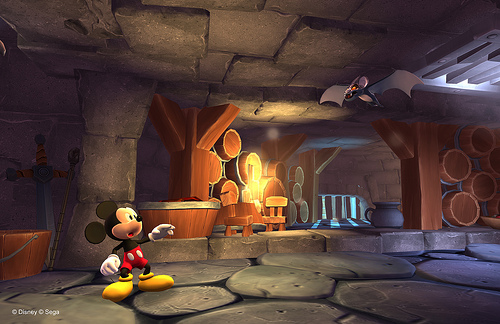
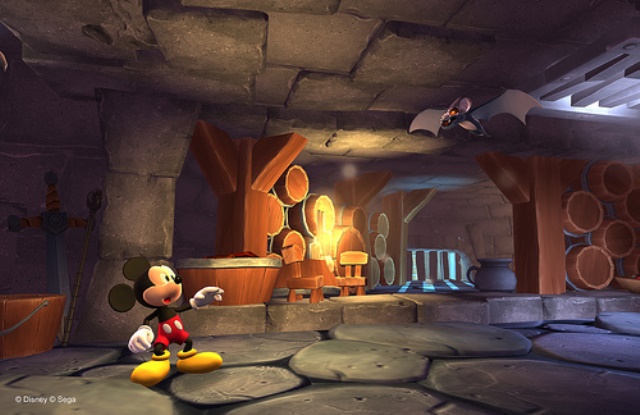
XBLAFans stopped to chat with Sega Studios Australia’s Omar Woodley, producer on Castle of Illusion Starring Mickey Mouse during E3. We discovered that calling the new version of Castle of Illusion a “remake” or “rerelease” doesn’t do it justice. Unlike other modern ports of classic games, such as Ubisoft’s Prince of Persia Classic or Capcom’s soon-to-be-released Ducktales Remastered, Castle of Illusion was described to us by Woodley as “a full reimagining of the game.”
The biggest, most immediately noticeable change beyond updated graphics and sound (which includes a charming voiceover for Mickey during gameplay) is the addition of a hub world. In the original game, Mickey wandered the Castle of Illusion to introduce each new level. Here, the castle is envisioned along the lines of Super Mario 64, as a three-dimensional hub world by which all of the levels are accessed. It’s a fun change that makes the castle feel like an actual place, instead of merely a setpiece for the plot.
According to Woodley, Sega Studios Australia had lots of “creative freedom to redesign the levels… When we played the original and we tried translating that to the new 3D world, some of those levels weren’t as challenging as they were back in the day. They actually played out to be quite long in length to this contemporary feel so we had to compensate for that, and we also just wanted to challenge the player and keep that difficultly setting pretty high to what the classic was. So we added these various components and a few different puzzles and tricks here and there to keep the challenge intact.”
 13 years ago
Contrast preview: in the shadowplay
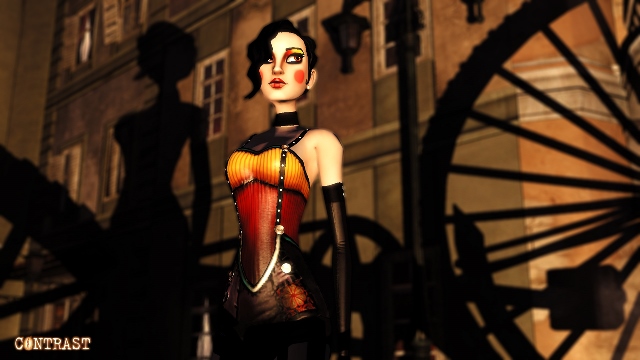
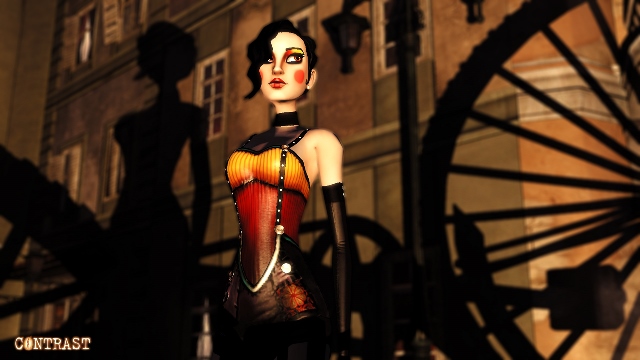
“So the basic idea being, what would happen if you could become your shadow, and I’ll start walking on shadow lines in the world. That really, at its core is where the game concept first evolved. In the same way as Portal, I wanted to create a mechanic that really fit well and [you could] learn well. So something that had enough depth that as long as there is a light source in the game you can become a shadow and use this mechanic in several ways.”
This is how Compulsion Games Studio Head Guillaume Provost presents his game to XBLAFans and a smattering of other members of the games media. He does it behind closed doors at Contrast‘s Electronic Entertainment Expo booth. It’s a little backwards. Having played the demo half an hour ago, I’ve already walked on the shadow lines to which Provost refers. I’ve already manipulated the power of light to illuminate a cabaret stage and subsequently born witness to a less-than-harmonious meeting of lovers after the close of the show for which I played at stagehand. I’ve already become a shadow to platform across the dark contours of merry-go-round horses at an eerily deserted circus in an old town.
Now, after they’ve already been experienced, these things are explained for the first time, and that leads into some questions. Chief among our curiosities are finding out who these characters are and what it means when they become shadows. Provost and Complusion’s public relations and community man, Sam Abbott, are mostly forthcoming with the answers. Mostly.
 13 years ago
Alien Rage attempts to pair modern conventions with old-school speed
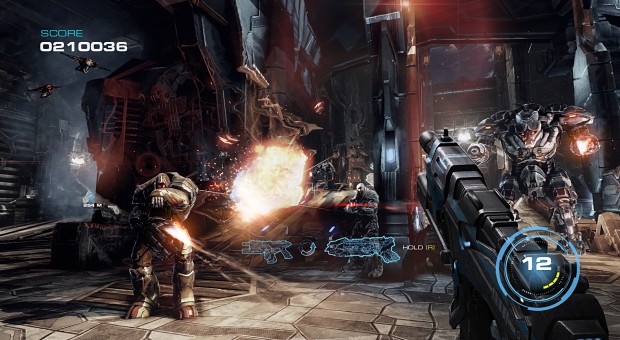
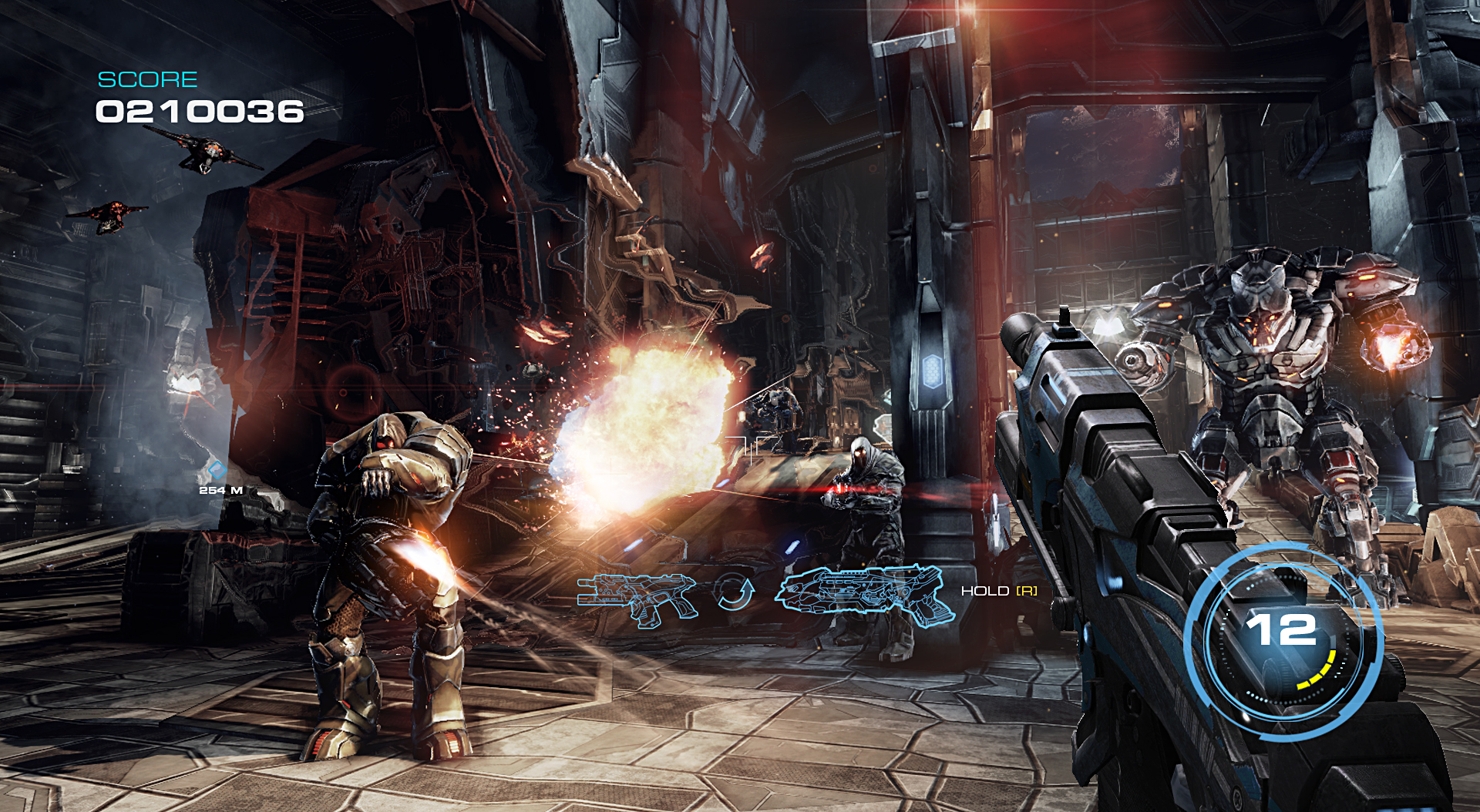
Standing in front of a PC demo station at E3, City Interactive Creative Director Steve Skelton describes Alien Rage to XBLAFans as a shooter that takes “the modern sensibilities of shooters — you know, control setup, mechanics, and applying the old-school fun and games, run and gun, frenetic action to it.” Unfortunately for fans of that style game, that pairing has considerably slowed down the raw speed of Unreal Tournament and Quake III (the “old-school” games mentioned by the developers as inspiration) to create space for those modern sensibilities.
Alien Rage takes place on a space station in which something has gone horribly wrong – the premise is not unlike that of the first episode of the classic Doom. There are no hellspawn here, however. The playable level pitted us against aliens that might remind older players of the first Predator film, complete with invisibility on a select few of them (these cause distortion to the surrounding air and environment, a particularly nice effect).
Since so much of City Interactive’s efforts were spent attempting to channel the magic that makes Unreal Tournament such a fondly remembered classic, it’s worth exploring some of those elements more specifically. Part of what made the late-90s/early-2000s generation of PC shooters what they were was that there were no limitations on the number of weapons a player could carry, which allowed players to be extremely creative in finding solutions to problems. Taking out an enemy around a corner in Unreal Tournament could be accomplished by setting a series of traps down with the bio-rifle, by bouncing a grenade off of the far wall or by detonating a shock rifle combo that would reach around the corner with its massive explosion.
Alien Rage limits the number of available guns to two, following the conventions of more modern shooters such as the Halo series. This means that while the player may have up to two or three different strategies for any given encounter, the full range of options will never be simultaneously available.
 13 years ago
Takedown: Red Sabre preview: This is your father’s Tom Clancy
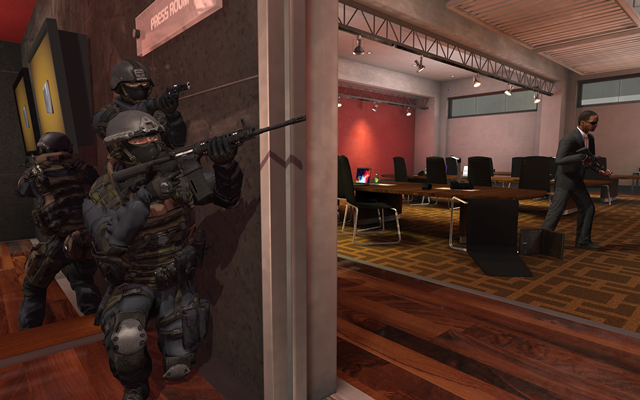
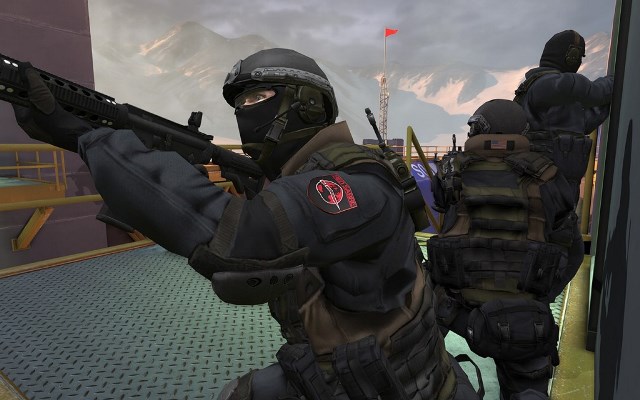
He knows what he wants, Christian Allen does. He’s known since the start. Even before the start, actually. Before Takedown: Red Sabre’s 2012 Kickstarter campaign successfully raised over $200,000, Allen, creative director at indie development studio Serellan, knew he wanted to go back.
He wanted to take gamers back in time. Not too far, only a few years. Back to a time when “tactical” shooters felt more, well, tactical. They had realistic combat — or as close as video games of that could come to approximating it, at least. The Tom Clancy video games from early last decade didn’t play anything at all like the myriad Halo, Gears of War and Call of Duty releases that dominate today’s shooter market. Certainly there is nothing inherently wrong with the approaches those games’ developers have taken to creating an FPS. There is something wrong, though: most everyone else is trying to make the same games as them.
Not Allen and his team at Serellan. Allen knows what he wants, and it isn’t Halo or Call of Duty. Lucky for him, he seems to have a team that knows how to deliver it.
Being a team player
He estimates that the least amount of experience anyone at Serellan has is eight years. Each member of the team has shipped multiple shooters for multiple platforms. As for Allen, between 2002 and 2007 he worked for Tom Clancy factory Red Storm Entertainment on various titles in the Ghost Recon and Rainbow Six franchises — tactical shooters. I ask if that deep and varied shooter development background meant Takedown would feature a lot of different concepts.
“I wouldn’t say it’s about concepts, because we’ve had a really clear vision from day one about what we wanted gamers to experience,” Allen responds. “The great thing about the different devs is that we’ve all shipped at least a billion dollars in revenue of games and almost exclusively shooter titles. So I know, for example, our weapons artist, our character artist, our environment artist — they know how to build shooter levels and content that works, so I can really fire and forget.”
 13 years ago
Rumor: Microsoft no longer charging devs for patches
The cost of developing a title update may have just gone down significantly.
Read More

 13 years ago
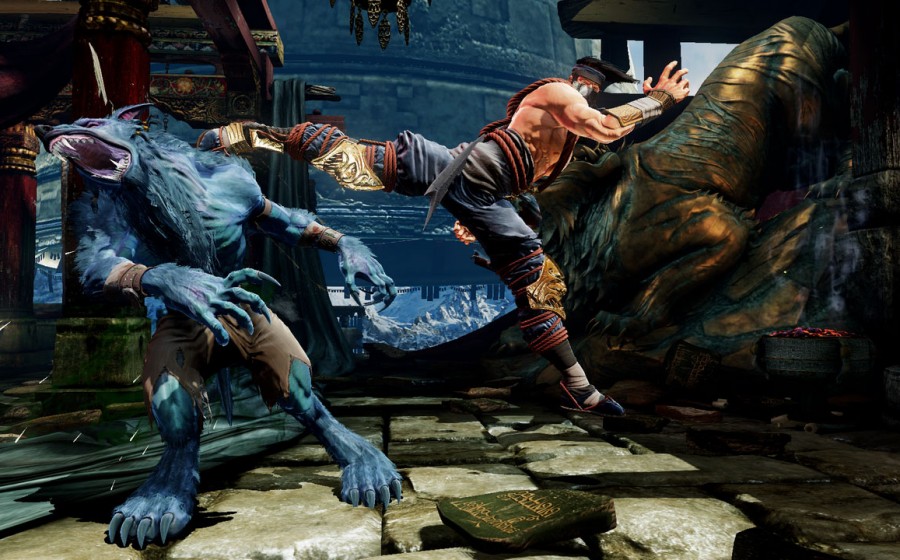
Killer Instinct poised to be a killer exclusive for Xbox One
The first punch of the next generation of fighters has been thrown, by a classic franchise returning in top form.
Read More
 13 years ago
Opinion: No sense in worrying about third-party DRM
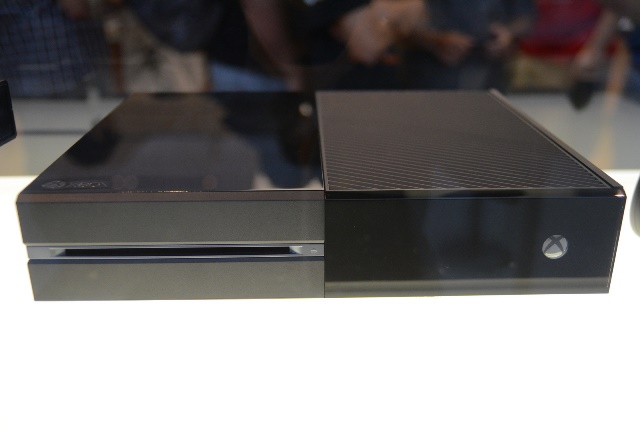
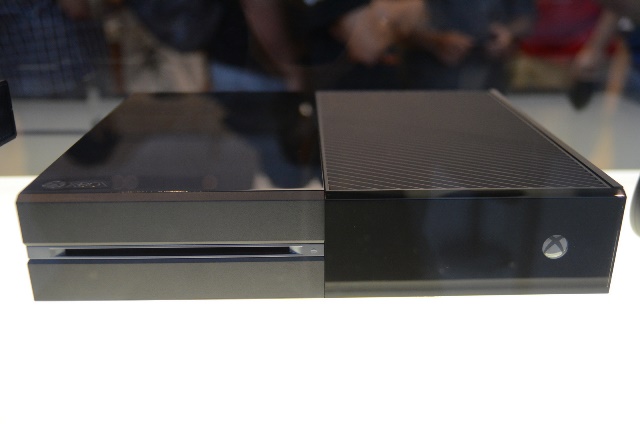
You’re angry, and I can understand that. You didn’t much care for Microsoft’s announcement last month that its next-generation console, the Xbox One, will feature oppressive DRM measures. The once-every-24-hours online check-in when playing on your own console and the once-an-hour check-in when playing on someone else’s is only slightly less draconian than what the public was fearing would be announced. On top of that, publishers will also have the option to limit gamers’ ability to buy, sell and trade used games.
The anger is based on the gaming public’s deduction that Microsoft’s goal is to minimize the used game market on the Xbox One. And while it does not appear poised to put forth any mandates to make that happen, it will be giving publishers, itself included, a host of new tools that will make it possible to achieve that goal. It would seem, then, that the public is right to be angry. It’s right to remain angry, too.
On Monday of last week I took my seat at University of Southern California’s Galen Center and watched as Microsoft talked about precisely what it said it would at E3: the games. That’s great, because the games are ultimately — or should be, at least — the main reason anyone decides to invest in a new gaming platform. It’s also bad, though, because it meant the platform holder did nothing to assuage gamer fears of an ironfisted Microsoft crippling the used game market.
That evening, rival Sony held its own press conference in which Sony Computer Entertainment America President and CEO Jack Tretton all but sat Microsoft Interactive Entertainment Business President Don Mattrick over a dunk tank and handed the audience softballs. Forget about bad. Things were now looking terrible for Microsoft.